What is sound therapy anyway?
At its most simple, sound therapy uses carefully chosen sounds to help a person, or even an animal, to heal and transform him or herself.
We have all experienced the power of music to spontaneously cause us to smile or laugh, to energize us when we feel tired, and to stir up our emotions. Sound therapy taps into this incredible reality of sounds, by using instruments specifically chosen for their ability to promote emotional, mental, spiritual and physical well-being.
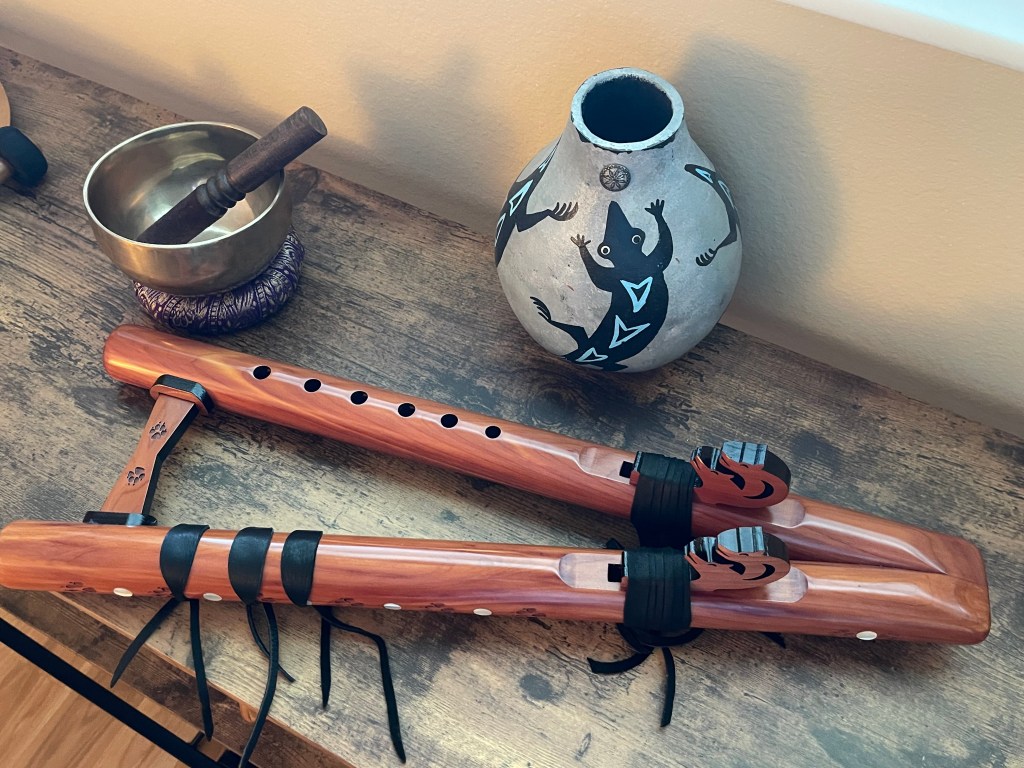
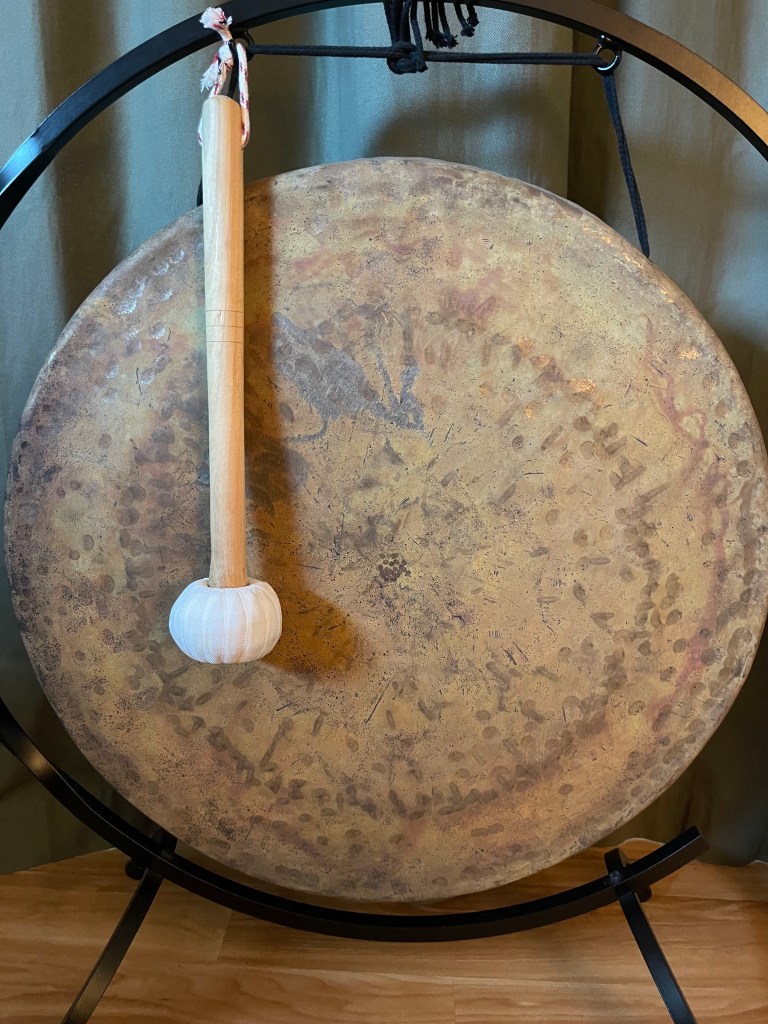
The use of sounds in a therapeutic manner has been around for thousands of years. Ancient cultures created instruments from what was available in nature, and used those in ceremonies that promoted healing of individuals or of groups. Drums were created from wood and animal hides, gongs and bowls were crafted as soon as humans learned to create and manipulate metal, seed pods were used as shakers, and in places like Australia, plant trunks, already hollowed out by termites, were turned into didgeridoos and used to provide music as well as in healing ceremonies. Today, a variety of instruments, some still hand crafted from natural elements, some machine made from very modern elements, have been found to produce sounds and vibrations that promote well-being in people and animals. While sound therapists can use most any instrument, there are some more commonly used than others. A sound therapist would probably have an array of ancient, hand-crafted instruments such as Himalayan bowls, drums, gongs, and shakers, as well as an assortment of more modern instruments, precision made by machines, such as tuning forks or crystal singing bowls.
Taking part in a sound therapy session is unique each time. The client usually lies down on a massage bed, or a mattress on the floor, although sitting in a chair or on a couch is also possible. Before any instruments are played, the sound therapy practitioner and the client will have a discussion as to the client’s reasons for seeking out the sound session. Maybe the client feels stress, or is struggling to sleep, or has a physical pain. Reasons for seeking sound therapy are as unique as is each client. Once the therapist has information regarding the client’s needs, she can then begin to formulate an idea as to which instruments to use and how to use them. At that point, the client either sits or lies down comfortably and accepts the comforting, healing vibrations of the instruments.
Sessions can last from 30 minutes to two hours. Most of the time, the therapist will ask for feedback from the client after the session in order to better help her provide the next session, should the client come back.
The vibrational benefits of the instruments do not stop when the client walks out of the door. One can expect that he or she will experience the relaxation, pain relief, mental calmness – whatever has come from the session – to continue on for a while. While sound therapy is cumulative – the effects of each session build upon the one before – there are still wonderful benefits from even a single experience with a sound therapist.
What is “Integral Sound Therapy,” and what are its benefits?
Sound therapy has numerous benefits for those who participate in it! The type of sound therapy that I practice is called “Integral Sound Therapy,” because if affects multiple levels of a person’s reality. It can be act as an alternative to medicine for the body, meditation for the mind, and peace for the soul! Depending upon what a person is experiencing as she walks into a sound session, she will realize outcomes unique to her specific needs.
When someone enters with specific pains, the sound practitioner will choose instruments to direct toward that pain. Sometimes the sound therapist will actually place a singing bowl on the person’s body (say, on his hand, if there is arthritis pain, for instance), while other times the instruments will all be played away from the body. (Sound therapists always check with their clients to make sure that there are no open wounds, metal implants, or other issues before deciding whether, if at all, to place an instrument on a client.) Through the vibrations of those carefully-chosen instruments, it is very common that the pain will lessen substantially, possibly even go away. When a person attends several sound sessions, the effects are often cumulative, providing even lasting relief from the pain,
A person whose mind is stressed and will not stop chattering might experience a deep calmness. In my experience, this has been the most surprising outcome for my clients. As the practitioner begins to play various calming instruments, many people report that their minds stop worrying and begin to drift into a meditation-like state. It is not uncommon for someone who has been overly stressed to fall asleep for a few minutes, but most people just report a serene calm that comes over them and gives them intense relaxation. Sound therapy doesn’t claim to take away the stressors of a person’s life; however, it often helps a client become calm enough to think of creative ways to approach those stressors!
Finally, Integral Sound Therapy touches deeply into many people’s souls. People who come to sound sessions distressed, depressed, feeling hopeless or lost, will often find a quiet peace enters into their souls. One of my clients expressed this newfound serenity by saying, “I had given up before coming here. Now I feel hope.”
Integral Sound Therapy is powerful. It uses no invasive chemicals or approaches to the receiver. Integral Sound Therapy merely uses beautiful instruments and sound waves to bring welcome benefits to those who participate in it.
How does sound therapy apply to pets?
Sound therapy applies to pets similarly to the way it applies to people. Just like their two-legged family members, pets can experience relief from pain as well as feel calmed.
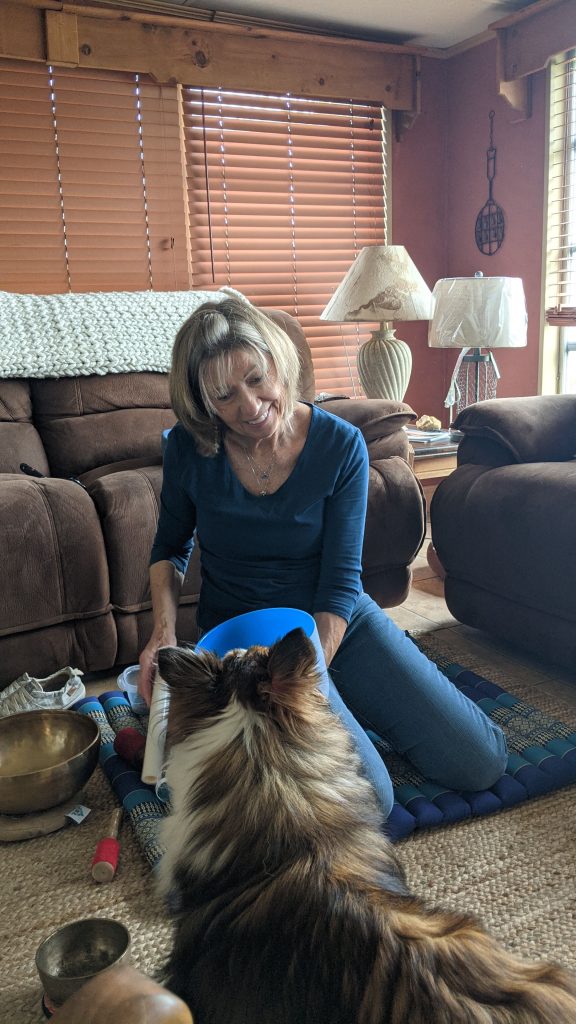
In a session with a pet, the sound therapist would first begin by spending some time with the pet, making sure that the pet felt safe and comfortable with the therapist nearby. If the pet allows the therapist to be close to her, then the therapist might sit or stand by the pet; however, it is not necessary to be touching the animal, just as it is not necessary to be touching people in a sound session. Sound vibrations travel through the air, and are potent healers from inches or from feet away!
Once the pet gives evidence of feeling comfortable, I like to start off with a gentle instrument, played very softly. In ALL sound therapy, louder is not at all better, and with pets, whose ears tend to be more sensitive than ours, that is especially true. If the pet relaxes even more to that instrument, then it is a good one to use in the therapy session with that animal. If not, then I will try a other instruments which produce different sounds until the pet seems to feel completely at peace.
After this, the sound session can begin in full swing. Usually, soft sounds from a variety of instruments are played; however, sometimes all it takes is one instrument that is well-accepted by the pet. Sometimes, as will people, the therapist might touch a spot on the pet with an instrument, but, just as with people, that is not at all necessary.
Sound sessions with pets do not usually last as long as with people. The pet itself has a lot to do with determining the length of the session. If, after a few minutes, the dog, cat, horse, or whatever animal, decides to walk away, then that is an indication that the sound session has probably come to its end. If the pet stays comfortably in place for a while, then the therapist will figure out how long the session needs to be. The goal with animals, as well as with humans, is not to meet a time requirement, it is to meet the particular needs that the pet presents at that moment.
As with people, sometimes cumulative sessions can have a more enduring effect on the pet, but often all it takes is one sound session for our four-legged friends to find calm and comfort.
 Sounds for Well-Being